 Doc Summary

Vision for Carme Building Restoration and Community Use
1. SECTOR NAME
Educational Sector for Digital Innovation and Cultural Exchange
2. SECTOR VISION STATEMENT
The restored building can serve as a European digital nomad and/or creative residency hub, bridging rural revitalization with contemporary cultural production.
Drawing on the valley’s rich historical and natural heritage, this proposed space will attract remote workers, digital professionals and creatives across Europe offer collaborative workspaces, and affordble short-term accommodations. Related with this, it will also function as a creative residency center hosting artists, educators, and culture workers for short-term stays. Throughout these workshops, collaborative projects, and cross-cultural exchanges, residents can coproduce creative projects about sustainable living, digital culture and community engagement.
It is this vision to transform the Carme building to a living bridge between isolation and connection, tradition and innovation, and work and creativity.
3. CURRENT CHALLENGES AND NEEDS
One of the main problems in Carme is that it faces critical demographic and economic challenges. The aging population lacks employment opportunities suited to younger generations, challenging outmigration to larger urban centers like Barcelona. Young people are reported to not see a future for meaningful work in local surroundings, while existing services are not attractive.
The valley’s natural beauty and cultural heritage are underutilized assets.
Additionally, rural digital connectivity lags urban standards, making it difficult for remote workers to consider relocation to the area.
4. PROPOSED FUNCTIONS OF THE RESTORED BUILDING
The proposed functions of the building will operate as a dual-purpose to provide for year along usage for cultural and digital nomads:
• Digital Nomad Hub: Co-working spaces with high-speed fiber internet, desk rentals, and meeting rooms. Target audiences include remote workers, freelancers, digital professionals, online educators, and tech entrepreneurs.
• Creative Residency: Around 10 guest rooms to accommodate artists, educators, writers, musicians, craftspeople, and researchers. Residencies can range from 2 weeks to a couple of months. Residents can benefit from reduced-cost housing, collaborative studio spaces, and access to the natural landscape.
• Workshop and Learning Space: Multi-functional event halls for seminars, artist talks, community gatherings, and educational programs. Some proposed topics for workshops include sustainable rural development, creative, and community-engaged art projects.
• Shared Kitchen and Dining: A communal kitchen and dining hall fostering social connection among residents, nomads, and local community members.
• Library and Archive: A collection of books, periodicals, and digital resources on rural history, sustainable development, and the village’s heritage.
5. KEY STAKEHOLDERS AND PARTNERSHIPS
From the perspective of digital and creative education the proposed networks and partnerships that will benefit the development of this project is:
Online Education Platforms & Networks: Partnerships with European online education providers to host virtual summits and create fellowships for young educators.
• European Arts & Creative Networks: Organizations like IETM (International Network for Contemporary Performing Arts) and regional artist collectives can promote residencies and co-produce exhibitions or performances.
•Digital Nomad Associations: Networks like Nomad List, European Digital Nomad Collectives, and co-working federations to market the space and attract quality residents.
•Local Authorities & Regional Tourism Boards: These organizations can provide support for infrastructure, marketing, and integration with regional tourism strategies.
•Cultural Foundations & Grant Bodies: European funding sources such as Creative Europe, Erasmus+, and national cultural ministries for residency bursaries and programming.
•Local Community Organizations: Collaboration with schools, libraries, cultural associations, and cooperatives to ensure the hub benefits long-term residents and maintains cultural and yearlong continuity.
6. EXPECTED IMPACT
Short-term impact (1–2 years):
•30–50 regular digital nomads and remote workers establishing themselves in the valley, creating demand for ancillary services (restaurants, retail, childcare).
•50–100 visiting residents across 4–6 artist residencies per year, generating cultural events and visibility for the region.
•10–15 new service and hospitality jobs created (management, maintenance, kitchen, guest services).
•Enhanced social cohesion: regular community events, cultural performances, and educational workshops engage residents and create intergenerational dialogue.
Long-term impact (5–10 years):
•Stabilized or growing youth population: younger professionals working remotely or establishing creative micro-enterprises, reducing net outmigration.
•Reputation as a European creative and digital hub: attracting investment in complementary infrastructure (boutique hotels, galleries, artisan food production, craft workshops).
•Knowledge generation: documented case studies and published research on sustainable rural regeneration, and creative place-making inform policy and practice across Europe.
•Cultural and ecological tourism: integrated into regional tourism circuits alongside historical sites (castle ruins) and natural attractions, creating a year-round visitor economy.
7. SUSTAINABILITY AND RESILIENCE
Mathemagenesis encourages providing digital skills to everyone and supports remote learning. Considering these the vision for the hub’s long term viability will depend on a diversified digitally supported revenue stream. Membership fees from digital nomads, room rentals for residents, workshop fees, and event hosting create multiple income streams. Possible Partnership fees from universities and cultural networks generate additional revenue. Online platforms and a podcast/newsletter extend reach and create ancillary revenue (sponsorships, merchandise).
The hub can respond proactively to social and economic shifts. As remote work is more normalized post-pandemic, digital nomads increasingly seek community and authenticity rather than anonymity. The hub addresses this demand. Simultaneously, climate anxiety and cultural burnout drive interest in slower living and rural creativity. By positioning itself at the intersection of digital connectivity and analog/natural immersion, the hub captures emerging demand.
Environmentally, the building’s renovation follows circular economy principles (adaptive reuse, renewable energy, water recycling). Programs on sustainable living and ecological literacy embed environmental values into the hub’s identity.
8. CONNECTION WITH OTHER HELICES
The proposed digital and creative hub for the building connects with the other helices as follows:
Economically, resident digital workers and entrepreneurs can contribute to the local economy while creative industries generate intellectual property and new business opportunities. Residency programs and creative initiatives also attract cultural tourists, whose spending supports local businesses in areas such as food, hospitality, and traditional crafts.
Socially, the hub strengthens community cohesion by creating opportunities for shared meals, cultural events, and collaborative projects that bring residents and visitors together. It provides a welcoming and dynamic environment for young people while helping to counter social isolation among aging residents through the attraction of younger populations and the creation of intergenerational connections.
The hub also supports environmental objectives through residency programs that incorporate ecological field schools, and artist-led environmental initiatives. Digital platforms and creative projects can help raise awareness of the valley’s unique natural beauty, biodiversity, and environmental assets, fostering a stronger culture of stewardship and sustainability.
Politically, the hub embodies the principles of the New European Bauhaus by encouraging citizen participation, cross-cultural dialogue, and inclusive approaches to place making practices. It will serve as a living laboratory for policy innovation, demonstrating new models for rural digital inclusion, creative economy development, and community-led regeneration.
9. ONE KEY MESSAGE
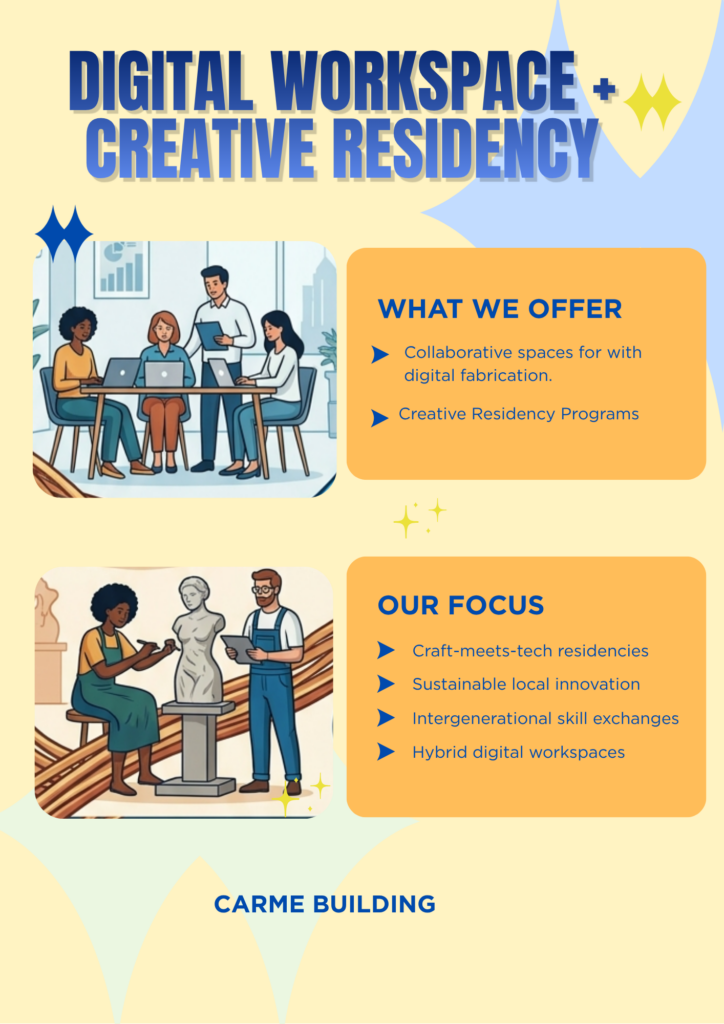
Discover a hidden gem of digital and creative place-making, where authentic cultural infrastructure, strong digital connectivity, and participatory governance demonstrate how rural communities can successfully attract, nurture, and retain young talent.
Disclaimer / Copyright Notice for ALL #
© Parts of this material were created and structured with the support of Artificial Intelligence (LLM); other parts were searched and created using CoPilot. The content was created to support analysis and reporting and was adapted and reviewed by the project team. Research was conducted using Bing and/or Google searches.
All trademarks and product names mentioned are acknowledged and remain the property of their respective owners.