 Doc Summary

ANIMA Building – Political Vision #
Vision for Băiuț Anima Building Restoration and Community Use
Sector Name #
Political
Sector Vision Statement #
Băiuț ANIMA Building – The multifunctional community hub
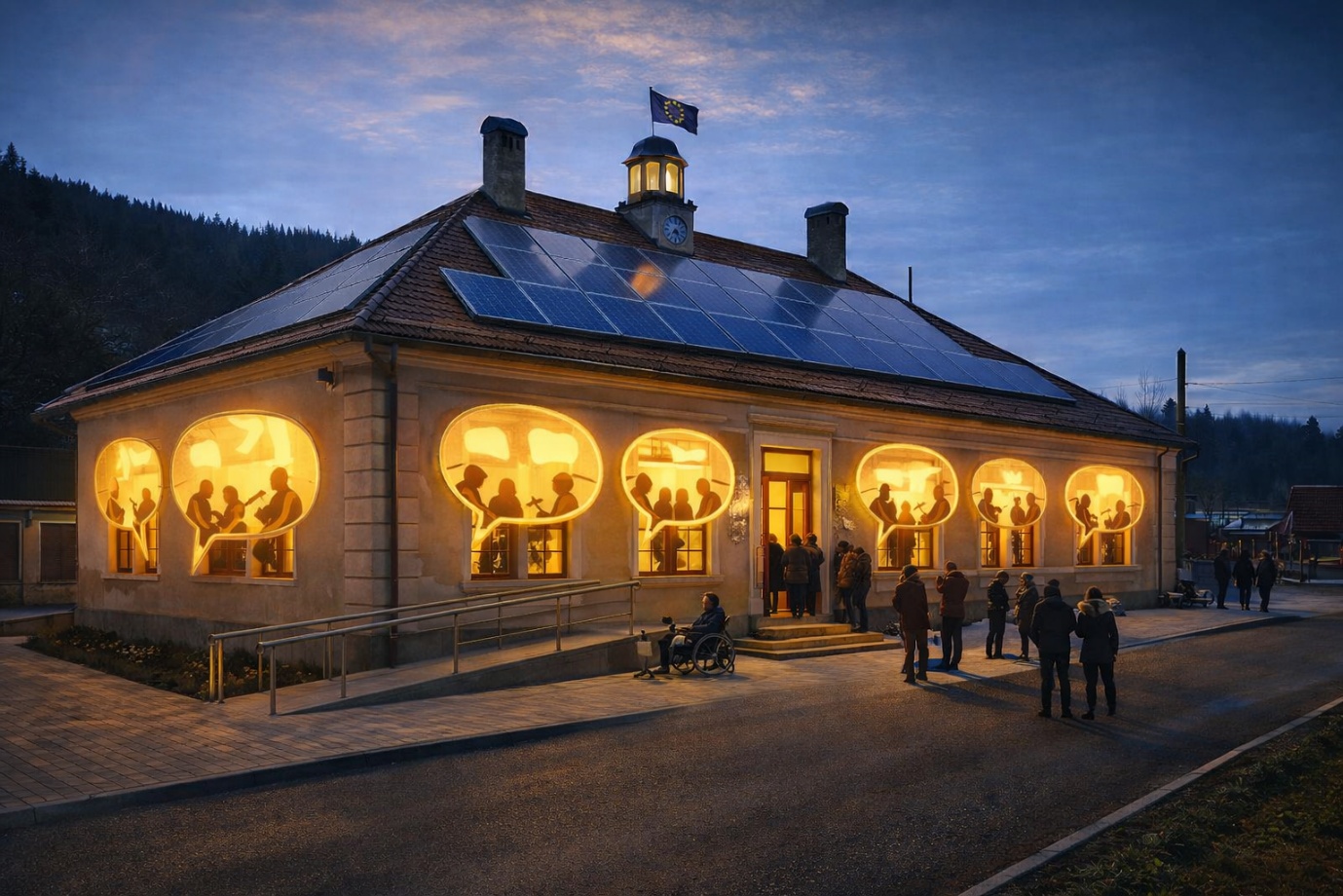
From a political and public policy perspective, the ANIMA building should function as a flagship civic asset aligned with the principles of the New European Bauhaus—sustainability, aesthetics, and inclusion.
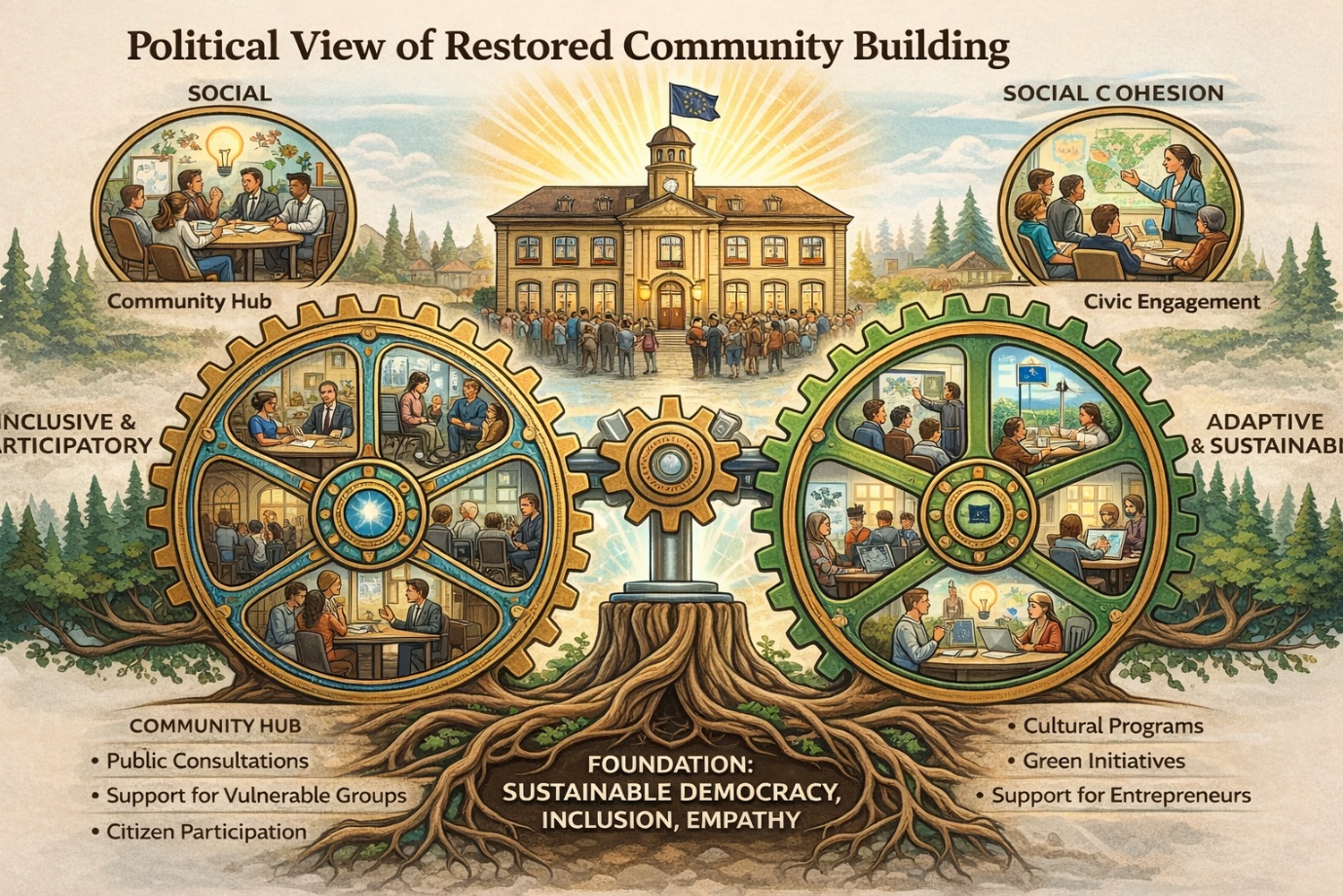
It should serve as a multifunctional community hub hosting cultural events, public consultations, educational programs, and social innovation initiatives, thereby strengthening democratic participation and local identity.
The primary beneficiaries are residents from Băiuț — particularly youth, entrepreneurs, cultural actors, and vulnerable groups—who gain access to shared space, knowledge, and opportunity.
By activating underused heritage infrastructure, the public sector adds value through urban regeneration, social cohesion, and long-term socio-economic resilience.
Current Challenges and Needs #
Băiuț faces structural vulnerabilities specific to post-mining rural communities: demographic decline, youth outmigration, aging population, and limited economic diversification.
These trends weaken civic participation, as fewer active residents engage in public consultations, community initiatives, or local governance processes.
Public services are available but fragmented, and there is no multifunctional civic space capable of hosting dialogue, training, cultural events, and institutional interaction under one roof.
The deteriorated condition of the historic building reflects more than physical decay—it symbolizes underused public patrimony and a missed opportunity for strategic community leadership.
When a landmark building remains inactive, it reinforces perceptions of stagnation and limited institutional capacity. The lack of adaptive reuse also means higher long-term maintenance costs and continued energy inefficiency, placing pressure on municipal budgets that are already constrained.
Civic trust is further affected by limited structured mechanisms for participatory governance. Without a visible, accessible democratic space, dialogue between authorities, civil society, entrepreneurs, and residents remains sporadic and informal. This reduces transparency, weakens collective problem-solving capacity, and slows strategic planning.
At the same time, environmental and economic transitions require new skills, partnerships, and governance models that currently lack a physical and institutional anchor. In this context, the absence of a central, energy-efficient, multifunctional civic hub directly limits Băiuț’s ability to coordinate regeneration, attract external funding, and build long-term resilience.
Proposed Functions of the Restored Building #
From a governance standpoint, the restored building should function as a Civic, Strategic and Regeneration Hub, serving simultaneously as an institutional platform, democratic forum, and coordination center for Băiuț’s long-term transition. It should anchor the political dimension of ANIMA by integrating decision-making, consultation, policy experimentation, and inter-helix coordination under one roof.
Core Governance Functions
Democratic Participation and Transparency
- Public consultations on local development strategies
- Participatory budgeting sessions and citizen proposal forums
- Open Local Council meetings streamed or hosted on-site
- Public reporting sessions on municipal performance indicators
- Mediation and dialogue forums for sensitive community issues
This formalizes participatory governance and increases institutional trust.
Strategic Planning and Policy Innovation
- Rural regeneration strategy workshops
- Post-mining transition roundtables
- Environmental policy coordination meetings
- EU project co-creation labs (PNRR, PNDR, Interreg, Horizon Europe)
- Policy simulation exercises with youth and civil society
The building becomes a policy laboratory where local governance evolves through experimentation and evidence-based planning.
Civic Education and Leadership Development
- Youth civic literacy and local democracy programs
- Training for newly elected officials and community leaders
- Workshops on public procurement transparency and ethics
- Governance internships in partnership with universities
This ensures generational renewal of leadership and strengthens democratic culture.
Institutional and NGO Support
- Shared office and meeting space for associations
- Administrative support for grassroots initiatives
- Legal and funding advisory desk for civic groups
- Platform for cross-sector coordination (economy–education–environment–society)
This reduces fragmentation and builds institutional density in a small rural context.
Information and Public Interface Center
- EU and national funding information desk
- Public access point for digital administrative services
- Diaspora engagement desk
- Tourism–heritage governance coordination office
The building becomes the visible “front office” of local governance.
Target Groups – Governance Lens
- Youth and students – future civic leaders and entrepreneurs
- Elderly residents – holders of memory and community legitimacy
- Local entrepreneurs and farmers – key economic stakeholders
- Civil society organizations – democratic intermediaries
- Families – primary beneficiaries of improved services
- Returning diaspora – potential investors and knowledge carriers
- Public officials and municipal staff – institutional backbone
The governance model ensures that no single category monopolizes access or influence.
Frequency and Operational Rhythm
Daily
- Coworking and civic administration interface
- Information desk for funding and permits
- NGO and project coordination meetings
Weekly
- Public forums and thematic consultations
- Educational workshops and governance trainings
- Advisory board meetings
Monthly / Quarterly
- Participatory budgeting cycles
- Strategic review sessions
- Monitoring and evaluation reporting
Seasonal / Annual
- Community assemblies
- Rural innovation conferences
- ANIMA impact review and public accountability event
Strategic Role Within ANIMA
The building is not merely a venue for governance activities; it is the institutional spine that connects economic vitality, educational programming, environmental stewardship, and social inclusion.
By concentrating deliberation, coordination, and accountability in one adaptive space, the restored building transforms governance from reactive administration into proactive community leadership.
Key Stakeholders and Partnerships #
From the political view, ANIMA’s success depends on a networked ecosystem rather than a single operator. Key actors include:
Local authorities (Mayor’s office and Local Council of Băiuț) – governance coordination and policy leadership.
Local residents – participatory engagement
Schools and educational institutions – civic education programs, such as Regina Elisabeta School from Baiut and other schools from the nearby area.
NGOs and community associations – program implementation, such as Rogepa and other local or regional NGO’s, informal groups or Diaspora netwoks helping to promote ANIMA’s offers abroad and attract participants to retreats and masterclasses.
County-level institutions (Maramureș County Council and other county authorities) – strategic alignment and supporting infrastructure, permitting, promotion, and co-financing.
SMEs, cooperatives, and local entrepreneurs – economic activation
Universities (regional partnerships) such as such Baia Mare universities, Technical University of Cluj-Napoca, Babes-Bolyai University from Cluj-Napoca, art and music academies – research and innovation input
Each stakeholder contributes either governance capacity, social capital, expertise, or economic activation, ensuring shared ownership of the space.
Expected Impact #
Short-Term Impact (1–2 Years):
Reactivation of a symbolic public space
Increased participation in local decision-making
Immediate job creation during restoration and initial operation
Improved public trust and institutional transparency
Long-Term Impact (5–10 Years):
Stronger democratic culture and civic literacy
Reduced youth outmigration through opportunity creation
Sustainable local economic ecosystem linked to tourism and heritage
Institutional resilience and adaptive governance capacity
Sustainability and Resilience #
The long-term sustainability of ANIMA is built on a structurally diversified model that combines mixed-use programming, blended financing (municipal allocations, EU structural funds, national programmes, private partnerships, and self-generated revenues), and high energy-performance renovation standards. This reduces financial vulnerability to a single funding source and protects the building from political or economic fluctuations.
Architecturally and functionally, the adaptive reuse approach ensures flexibility: spaces can shift between cultural events, educational workshops, coworking, public consultations, and tourism-related activities depending on seasonal demand or demographic trends. This multifunctionality is essential in a small rural community, where rigid mono-functional infrastructure often becomes obsolete.
Energy-efficient renovation, bioconstruction elements, and smart resource management (heating, lighting, water use) significantly lower operational costs over time. Reduced expenditure on utilities directly strengthens financial resilience, while visibly green infrastructure reinforces ANIMA’s educational and demonstrative role in the ecological transition. The building itself becomes a permanent exhibit of sustainable rural regeneration.
Governance resilience is equally central. By embedding participatory mechanisms—public reporting, open budgeting sessions, citizen advisory boards, and transparent procurement procedures—the project safeguards political legitimacy beyond electoral cycles. ANIMA is designed not as a mayoral project, but as a community institution with shared oversight and distributed responsibility.
A formal multistakeholder governance body—representing economic actors, educators, environmental experts, civil society, youth, and local authorities—conducts annual performance reviews. This body evaluates financial sustainability, social accessibility, environmental indicators, and programmatic relevance. Based on evidence, it can adjust pricing structures, cross-subsidization mechanisms, partnership strategies, and investment priorities. This iterative governance model ensures that revenue generation never overrides social equity or ecological limits.
In the broader context of post-mining transition, resilience also means narrative transformation. By consistently communicating results—jobs created, emissions reduced, participation rates increased—ANIMA builds a culture of accountability and adaptive learning. This positions the building not only as resilient infrastructure, but as a governance platform capable of responding proactively to demographic change, funding shifts, climate risks, or economic volatility over the next decades.
Connection with Other Helices #
- Educational activities strengthen human capital, directly supporting economic development.
- Green renovation measures reduce energy costs, enabling social programs.
- Cultural programming enhances tourism potential and local entrepreneurship.
- Civil society engagement improves policy innovation and administrative efficiency.
The governance vision acts as an integrator between economic, social, educational, and environmental sectors.
Politics / Governance ⇄ Environment
From a governance standpoint, environmental protection becomes a regulatory and strategic commitment, not a branding element. Local authorities embed forest protection, landscape management, water stewardship, and energy-efficient renovation standards into local development strategies, zoning rules, and public procurement criteria.
By formally recognizing ecosystems as public assets, governance creates the legal and policy stability necessary for long-term ecological investment. In return, a well-preserved natural environment strengthens political credibility: visible environmental quality demonstrates competent stewardship and reinforces citizens’ trust in local institutions.
Politics / Governance ⇄ Education
Governance ensures that ANIMA is not an isolated project but part of a structured local learning ecosystem. Through formal agreements with schools, universities, and vocational centres, public authorities institutionalize ANIMA as a satellite civic campus for rural innovation, heritage restoration, and ecological transition.
Transparent governance structures—clear management rules, accountability mechanisms, participatory advisory boards—also function as real-life case studies in democratic practice for students and youth. In this way, governance is not only administrative; it becomes pedagogical, demonstrating how local democracy works in practice.
Politics / Governance ⇄ Society
Politically, ANIMA serves as an anchor for rebuilding social trust after economic decline. By institutionalizing participatory budgeting, open consultations, and community representation in decision-making bodies, governance shifts from a top-down model to a co-creation model.
Inclusive access policies (subsidized events, open public days, community forums) ensure that the building remains a shared civic space rather than a selective venue. In turn, active civic participation strengthens democratic culture, reduces polarization, and increases accountability of local leadership.
Politics / Governance ⇄ Economy
Stable, transparent governance frameworks lower investment risk and create predictability for entrepreneurs, educators, and partners. Clear long-term agreements on ownership, management structure, and reinvestment rules allow ANIMA’s economic activities to flourish without political volatility.
Simultaneously, the generation of own revenues strengthens municipal autonomy: reduced dependency on external transfers improves fiscal resilience and enhances co-financing capacity for European and national programmes. Economic performance therefore reinforces institutional stability, while good governance sustains economic credibility.
Politics / Governance ⇄ Natural Environment (Feedback Loop)
By systematically measuring social, environmental, and economic outcomes, governance transforms ANIMA into a policy laboratory for post-mining rural transition. Data on jobs created through green activities, participation rates, biodiversity improvements, and energy savings feed into local and regional strategies.
This evidence-based governance model positions Băiuț as a demonstrator of how democratic rural communities can manage ecological transition pragmatically. Successful environmental outcomes reinforce political legitimacy, while transparent governance ensures that environmental commitments remain long-term rather than electoral.
Core Political Vision
From the governance perspective, ANIMA is not only a restored building—it is an institutional platform where democracy, sustainability, and development are continuously negotiated, measured, and improved together.
One Key Message #
“A restored building is not just infrastructure—it is the institutional heart of democratic life in Băiuț.”