
 Doc Summary

Test, self-assessment sheet and online tools for Circular Economy – Recommended Evaluation and Assessment Tools! #
About this package #
One of the core goals of the BeCom project is to build capacities across partner communities. To make sure that learning, application and impact are monitored and supported, knowledge is assessed with the same three-part scheme:
- Test (knowledge assessment). Measures how well participants have understood the concepts, examples and learning resources of the BeCom portfolio in each area.
- Self-assessment sheet (self-evaluation). Helps participants assess a concrete building, initiative or garden in their own context, apply what they have learned, reflect on strengths and weaknesses, and identify improvement opportunities.
- Online tools (benchmarking and further learning). A selection of freely accessible tools and methodologies that support comparison, planning and improvement, and connect local action with recognised international practice.
Together, the three parts verify understanding, stimulate reflection and link local practice with transferable methods. The package works both as a learning tool and as a mechanism for continuous improvement within the BeCom network.
The document is organised in three blocks, one per thematic area. Each block contains its own test, self-assessment sheet and selection of online tools, so it can also be used on its own.
How to use the package #
1. Test #
How to use it
Choose one answer for each question. Only one option is correct.
Check your answers with the answer key, which follows each test on a separate page.
Use your results to identify the topics or dimensions that call for review, discussion or practical experimentation.
Trainers, facilitators and project partners can also use the tests with groups, to stimulate discussion, compare perspectives or evaluate group learning outcomes.
Go to: Circular Economy Test
2. Self-assessment sheet #
How to use it
Choose a concrete case: an existing or planned building, a circular economy initiative or a community garden.
For each criterion, select a score from 0 to 4: 0 = Not at all; 1 = Very limited; 2 = Basic progress; 3 = Good achievement; 4 = Excellent / fully achieved.
Add short notes or evidence, and write at least one improvement action.
Add up the scores per dimension (maximum 20 points each) and complete the summary table.
The three sheets share the same five dimensions (Environment, Society, Education, Economy, and Politics & Governance), so results can be compared across areas.
Go to: Circular Economy self-assessment sheet
3. Online tools #
How to use it
BeCom promotes an open, inclusive and transferable approach to learning and assessment, so the tools were chosen to be freely or openly accessible wherever possible and usable by communities, educators and practitioners. The “Access” line of each tool gives the details.
Complete the self-assessment sheet first, then choose the tools that address your lowest-scoring dimensions.
For group work, compare two tools and discuss which one best fits the local context, scale and stakeholders.
Go to: Circular Economy online tools
B.1 Test: quiz by category #
The test has two parts:
- Part A. Quiz by category: 25 questions of moderate difficulty, five per category. The categories correspond to the five dimensions of the self-assessment sheet.
- Part B. Practical examples and application: 10 further questions on the good-practice examples of the portfolio and on transferring circular economy principles to new contexts.
Count your correct answers per category to see which dimensions you may want to review.
Category 1. Environment: Circular Resource Systems
Focus: circular resource flows, waste reduction, composting, repair, reuse, and climate links.
1. A circular resource system is different from a linear system because it mainly tries to:
A. Make products faster and cheaper, even if they become waste quickly.
B. Keep materials, products, and biological resources circulating for as long as possible.
C. Replace all human-made systems with untouched natural systems.
D. Focus only on recycling after products are thrown away.
2. According to the climate-focused circular economy material, renewable energy alone cannot solve all emissions because many emissions are connected to:
A. How products are made and how food is produced.
B. Only electricity use in homes.
C. Only transport between countries.
D. A lack of environmental education in schools.
3. Which action best shows “regenerating natural systems” at community level?
A. Sending all organic waste to landfill.
B. Composting bio-waste and returning nutrients to soil.
C. Buying more plastic bags for cleanliness.
D. Burning food waste to make space.
4. The Kyklos Circularity Lab example is especially useful because it shows circular economy at the scale of:
A. A neighbourhood, through repair, composting, sharing, and participatory mapping.
B. Only a national ministry.
C. A single global corporation.
D. A laboratory with no public participation.
5. Why are waste data and visualisations from public environmental agencies useful for circular economy learning?
A. They make waste problems look less important.
B. They help learners analyse waste systems and evaluate impacts with evidence.
C. They replace the need for local action.
D. They focus only on product advertising.
Category 2. Education: Circular Learning & Systems Thinking
Focus: learning methods, systems thinking, circular design education, reflection, and interdisciplinary learning.
6. In circular economy education, systems thinking is useful because it helps learners see:
A. Only the final price of a product.
B. Connections between design, materials, users, business models, and environmental effects.
C. Why social behaviour is unrelated to sustainability.
D. How to solve circular problems with one isolated action.
7. A good circular economy classroom activity would most likely ask learners to:
A. Design a way to reduce waste or extend product life.
B. Memorise a definition without applying it.
C. Compare brands only by price.
D. Ignore social and environmental effects.
8. Why are open-access courses and toolkits important for inclusion?
A. They limit learning to university students only.
B. They make circular economy knowledge available to more learners, educators, and practitioners.
C. They remove the need for practical examples.
D. They are designed only for large businesses.
9. Which topic from the TU Delft / edX circular economy course best connects design with nature-inspired solutions?
A. Biomimicry.
B. Single-use marketing.
C. Linear supply chains only.
D. Traditional waste disposal.
10. Which statement best describes circular economy learning in this category?
A. It is only about recycling techniques.
B. It links theory with real examples such as repair, reuse, sharing, design, and systems change.
C. It avoids community and business questions.
D. It is only relevant to environmental scientists.
Category 3. Social: Community & Behavioural Change
Focus: participation, behaviour change, repair culture, sharing models, zero waste, and community recycling.
11. A Repair Cafe supports circular economy mainly by:
A. Helping people fix items, share skills, and extend product life.
B. Encouraging people to replace broken products immediately.
C. Collecting broken items without teaching repair skills.
D. Making repair available only to professionals.
12. A Library of Things can reduce environmental impact because it:
A. Allows households to share items instead of everyone buying rarely used products.
B. Encourages every household to own more tools.
C. Focuses only on books and school materials.
D. Works only if products are used once.
13. Behavioural insights are useful for circular transitions because they help project teams:
A. Design engagement that makes repair, reuse, and composting easier and more attractive.
B. Force everyone to behave the same way.
C. Avoid communication with residents.
D. Focus only on technical machines.
14. The Precious Plastic example is socially important because it:
A. Keeps recycling knowledge secret.
B. Gives open-source tools and knowledge for community-scale plastic recycling.
C. Depends only on large industrial recycling plants.
D. Discourages local workshops.
15. Which combination best describes a strong community circular project?
A. Technology only, with no residents involved.
B. Participation, practical tools, shared benefits, and visible behaviour change.
C. A one-time lecture with no follow-up action.
D. A project that increases household waste.
Category 4. Economy: Circular Business Models
Focus: circular design, economic value, product life extension, sharing capacity, business strategy, and regenerative models.
16. A circular business model creates value by:
A. Selling more disposable products as quickly as possible.
B. Designing products and services so materials and value stay in use longer.
C. Avoiding all cooperation with customers.
D. Treating repair as a problem for business growth.
17. Which example best represents “slowing loops” in a circular business model?
A. Designing durable products that can be repaired and reused.
B. Using more raw materials to increase sales.
C. Making products impossible to disassemble.
D. Promoting single-use packaging.
18. Product-as-a-service can support circular economy because the provider has an incentive to:
A. Make products last longer and maintain them efficiently.
B. Make products fail quickly after purchase.
C. Stop tracking product performance.
D. Use more materials without recovery.
19. The Doughnut Economics framework adds to circular economy thinking by asking whether an economy:
A. Meets people’s needs while staying within ecological limits.
B. Maximises consumption no matter the environmental cost.
C. Focuses only on recycling profits.
D. Removes social questions from economic decisions.
20. Why can circular business models be attractive to companies and communities?
A. They can reduce waste while creating economic value through repair, reuse, sharing, and service models.
B. They always require higher waste production.
C. They only work for global corporations.
D. They remove the need for innovation.
Category 5. Politics: Governance & Circular Policy
Focus: EU and national policy, local governance tools, urban strategies, right to repair, and public participation.
21. The EU Circular Economy Action Plan is important because it:
A. Provides a policy framework for product design, waste reduction, repairability, and circular transition.
B. Only explains how individual people should recycle at home.
C. Discourages product durability.
D. Applies only to private companies with no role for government.
22. Local governments can support circular economy by using tools such as:
A. Public purchasing, zoning, communication, funding, and partnerships.
B. Only individual household fines.
C. Advertising without services or policy support.
D. Avoiding cooperation with civil society.
23. Why are city-level circular strategies important?
A. Cities can turn circular principles into local services, infrastructure, and community projects.
B. Cities have no influence on waste, buildings, or public space.
C. Cities only follow policy and never create solutions.
D. Circular economy is only managed by international organisations.
24. The “right to repair” fits circular policy because it supports:
A. Product durability, repairability, and longer use.
B. Shorter product lifetimes.
C. More barriers to fixing products.
D. Disposable product design.
25. A national circular economy roadmap, such as Serbia’s, helps learners understand:
A. How national priorities and governance mechanisms connect to local circular initiatives.
B. Why community projects should ignore policy.
C. Why circular economy is only a design topic.
D. How to avoid cooperation between national and local actors.
Answer key: Circular Economy test #
Part A. Quiz by category
No. | Answer | Why |
|---|---|---|
Category 1. Environment: Circular Resource Systems | ||
1 | B | Circular systems aim to maintain value through reuse, repair, recycling, and regeneration, not simply manage waste at the end. |
2 | A | The material highlights emissions embedded in production systems and food systems, which circular strategies can address. |
3 | B | Composting closes organic loops and helps return nutrients to natural systems. |
4 | A | Kyklos is presented as a neighbourhood living lab with practical, participatory circular actions. |
5 | B | Evidence-based data supports understanding of waste prevention, recycling, and environmental impacts. |
Category 2. Education: Circular Learning & Systems Thinking | ||
6 | B | Systems thinking connects different parts of the circular transition instead of studying them separately. |
7 | A | The learning materials emphasise action-based and creative activities linked to circular principles. |
8 | B | Open learning resources reduce access barriers and support wider participation. |
9 | A | Biomimicry is one of the roots and design ideas associated with circular economy learning. |
10 | B | The category presents circular learning as interdisciplinary and grounded in real-world circular practices. |
Category 3. Social: Community & Behavioural Change | ||
11 | A | Repair Cafes combine product life extension with learning, social connection, and practical skills. |
12 | A | Shared access reduces consumption, manufacturing demand, and household waste. |
13 | A | Behavioural strategies can support participation by using social norms, visibility, and practical motivation. |
14 | B | Precious Plastic democratises recycling through open designs, tutorials, and peer learning. |
15 | B | Community circularity depends on participation, practical implementation, and habits that people can adopt. |
Category 4. Economy: Circular Business Models | ||
16 | B | Circular businesses aim to retain value through design, repair, reuse, service models, and recovery. |
17 | A | Slowing loops means extending product life through durability, reuse, repair, and product-service systems. |
18 | A | When companies retain ownership or responsibility, durability and maintenance can become economic advantages. |
19 | A | The Doughnut framework connects social foundations with planetary boundaries. |
20 | A | The materials present circular models as both sustainability strategies and opportunities for economic value. |
Category 5. Politics: Governance & Circular Policy | ||
21 | A | The Action Plan sets policy direction and measures for circularity across sectors and levels of government. |
22 | A | Circular governance can involve procurement, planning, financing, communication, and public-civil partnerships. |
23 | A | Cities are practical spaces where policy can become local action, services, and circular urban design. |
24 | A | Repairability policies help products stay in use longer and reduce waste. |
25 | A | National roadmaps show priority sectors, policy roles, and connections between EU, national, and local action. |
B.2 Self-assessment sheet: Circular Economy #
Use this sheet to evaluate a circular economy initiative, project, learning programme, social enterprise or local strategy. The criteria are adapted to circular economy practice.
Scale: 0 = Not at all · 1 = Very limited · 2 = Basic progress · 3 = Good achievement · 4 = Excellent / fully achieved
Environment #
Criterion | Guiding question | Score (0–4) | Notes / evidence | Improvement actions |
|---|---|---|---|---|
Waste prevention | Does the initiative reduce waste generation at source rather than only managing waste after it appears? | ☐0 ☐1 ☐2 ☐3 ☐4 | ||
Reuse and repair | Does it extend product life through reuse, repair, maintenance, redesign, or redistribution? | ☐0 ☐1 ☐2 ☐3 ☐4 | ||
Organic cycles and regeneration | Does it include composting, biomass use, soil regeneration, or other biological loops where relevant? | ☐0 ☐1 ☐2 ☐3 ☐4 | ||
Resource efficiency and local materials | Does it make good use of local, renewable, recycled, or low-impact resources? | ☐0 ☐1 ☐2 ☐3 ☐4 | ||
Climate contribution | Does it reduce emissions, material intensity, or dependence on extractive linear systems? | ☐0 ☐1 ☐2 ☐3 ☐4 |
Society #
Criterion | Guiding question | Score (0–4) | Notes / evidence | Improvement actions |
|---|---|---|---|---|
Inclusion and accessibility | Is the initiative accessible to diverse groups, including vulnerable or underrepresented communities? | ☐0 ☐1 ☐2 ☐3 ☐4 | ||
Community participation | Are residents, users, or stakeholders actively involved in design, delivery, or decision-making? | ☐0 ☐1 ☐2 ☐3 ☐4 | ||
Social benefit | Does the project create clear social value such as redistribution, support, dignity, or stronger community ties? | ☐0 ☐1 ☐2 ☐3 ☐4 | ||
Behavioural change | Does it encourage more circular everyday practices such as repair, sharing, sorting, or responsible consumption? | ☐0 ☐1 ☐2 ☐3 ☐4 | ||
Identity and wellbeing | Does it strengthen local identity, cultural value, pride, or a sense of belonging? | ☐0 ☐1 ☐2 ☐3 ☐4 |
Education #
Criterion | Guiding question | Score (0–4) | Notes / evidence | Improvement actions |
|---|---|---|---|---|
Learning by doing | Does the project create hands-on learning opportunities through real circular practice? | ☐0 ☐1 ☐2 ☐3 ☐4 | ||
Workshops and training | Are there training sessions, guided activities, or educational programmes linked to the initiative? | ☐0 ☐1 ☐2 ☐3 ☐4 | ||
Intergenerational knowledge transfer | Does it help transfer practical knowledge, craftsmanship, or experience between generations or groups? | ☐0 ☐1 ☐2 ☐3 ☐4 | ||
School / VET / university links | Is the initiative connected to schools, adult learning, VET, universities, or research partners? | ☐0 ☐1 ☐2 ☐3 ☐4 | ||
Knowledge sharing | Are methods, lessons learned, or results documented and shared so others can learn or replicate them? | ☐0 ☐1 ☐2 ☐3 ☐4 |
Economy #
Criterion | Guiding question | Score (0–4) | Notes / evidence | Improvement actions |
|---|---|---|---|---|
Local jobs and livelihoods | Does the initiative create or support decent local jobs, micro-enterprises, or income opportunities? | ☐0 ☐1 ☐2 ☐3 ☐4 | ||
Local value chains | Does it keep materials, skills, and economic value circulating within the local or regional economy? | ☐0 ☐1 ☐2 ☐3 ☐4 | ||
Business model viability | Is there a realistic financial model, revenue stream, or long-term resource plan? | ☐0 ☐1 ☐2 ☐3 ☐4 | ||
Affordability and shared access | Does it lower costs or increase access to goods, services, or opportunities for users? | ☐0 ☐1 ☐2 ☐3 ☐4 | ||
Innovation and market relevance | Does it apply circular business ideas in a way that is credible, useful, and potentially replicable? | ☐0 ☐1 ☐2 ☐3 ☐4 |
Politics & Governance #
Criterion | Guiding question | Score (0–4) | Notes / evidence | Improvement actions |
|---|---|---|---|---|
Policy alignment | Is the initiative aligned with municipal, regional, national, or EU circular economy goals or regulations? | ☐0 ☐1 ☐2 ☐3 ☐4 | ||
Partnerships | Are there active partnerships among public authorities, civil society, education, and business actors? | ☐0 ☐1 ☐2 ☐3 ☐4 | ||
Public-civil society cooperation | Does the governance model combine institutional support with community-facing delivery? | ☐0 ☐1 ☐2 ☐3 ☐4 | ||
Transparency and monitoring | Are impacts, processes, and results documented clearly enough to support accountability and learning? | ☐0 ☐1 ☐2 ☐3 ☐4 | ||
Replication and scaling | Can the initiative be adapted, transferred, or expanded to other places or sectors? | ☐0 ☐1 ☐2 ☐3 ☐4 |
Summary of scores #
Dimension | Total score (out of 20) |
Environment | ____ / 20 |
Society | ____ / 20 |
Education | ____ / 20 |
Economy | ____ / 20 |
Politics & Governance | ____ / 20 |
B.3 Online tools: Circular Economy #
The tools below are openly accessible, practical and well aligned with the circular economy examples and learning resources of the portfolio.
1. PSLifestyle: Lifestyle Test #
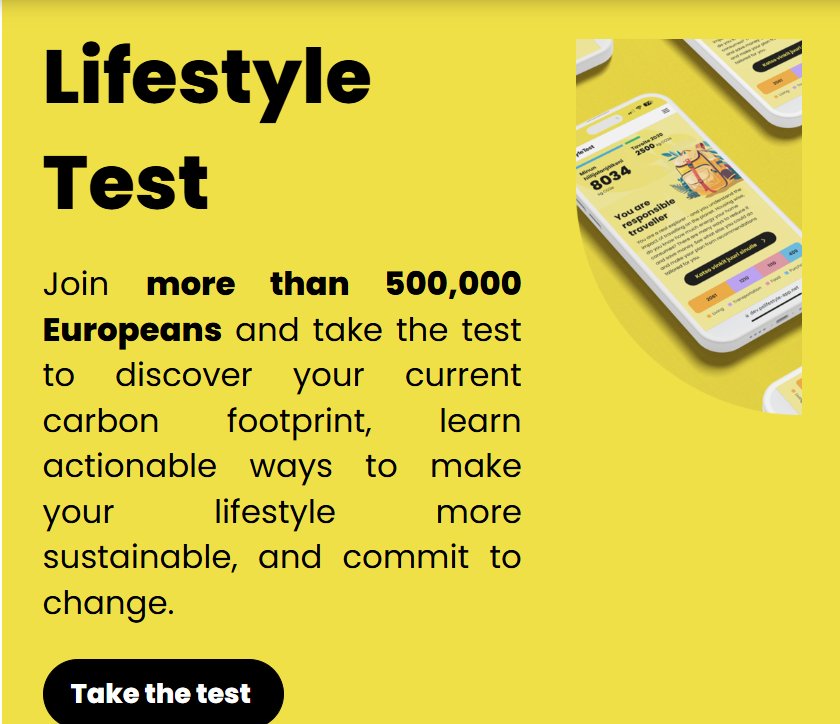
Description: An interactive self-assessment where users answer questions about their everyday lifestyle and receive an estimate of their environmental footprint, together with personalised suggestions for improvement.
Access: Free online tool, available through the PSLifestyle website.
Key areas: Consumption, food, mobility, housing, waste prevention, reuse, repair, sustainable lifestyle choices.
Why it fits: It is simple, personal and interactive. It helps users evaluate their own behaviour and immediately connects their answers with practical circular and sustainable actions.
Website: https://pslifestyle.eu/
2. The Waste Game #
Description: A gamified online learning tool where users complete challenges, answer questions and collect points while learning how to prevent and manage waste.
Access: Free online game.
Key areas: Waste prevention, recycling, food waste, reusable products, packaging, second-hand products, responsible consumption.
Why it fits: It makes waste and recycling education more engaging than a traditional questionnaire. The challenges and points system encourage participation and are suitable for workshops or individual learning.
Website: https://thewastegame.iua.ie/
3. Circularity Check #
Description: A short self-assessment that helps companies evaluate how circular their current activities and business practices are.
Access: Free online questionnaire.
Key areas: Circular business models, resource use, product design, reuse, recycling, organisational practices, circular-economy transition.
Why it fits: It provides a quick and structured way for organisations to understand their current circularity level. It is especially useful for SMEs, entrepreneurs and business participants.
Website: https://circularitycheck.ch/en/welcome
4. Zero Waste Game #
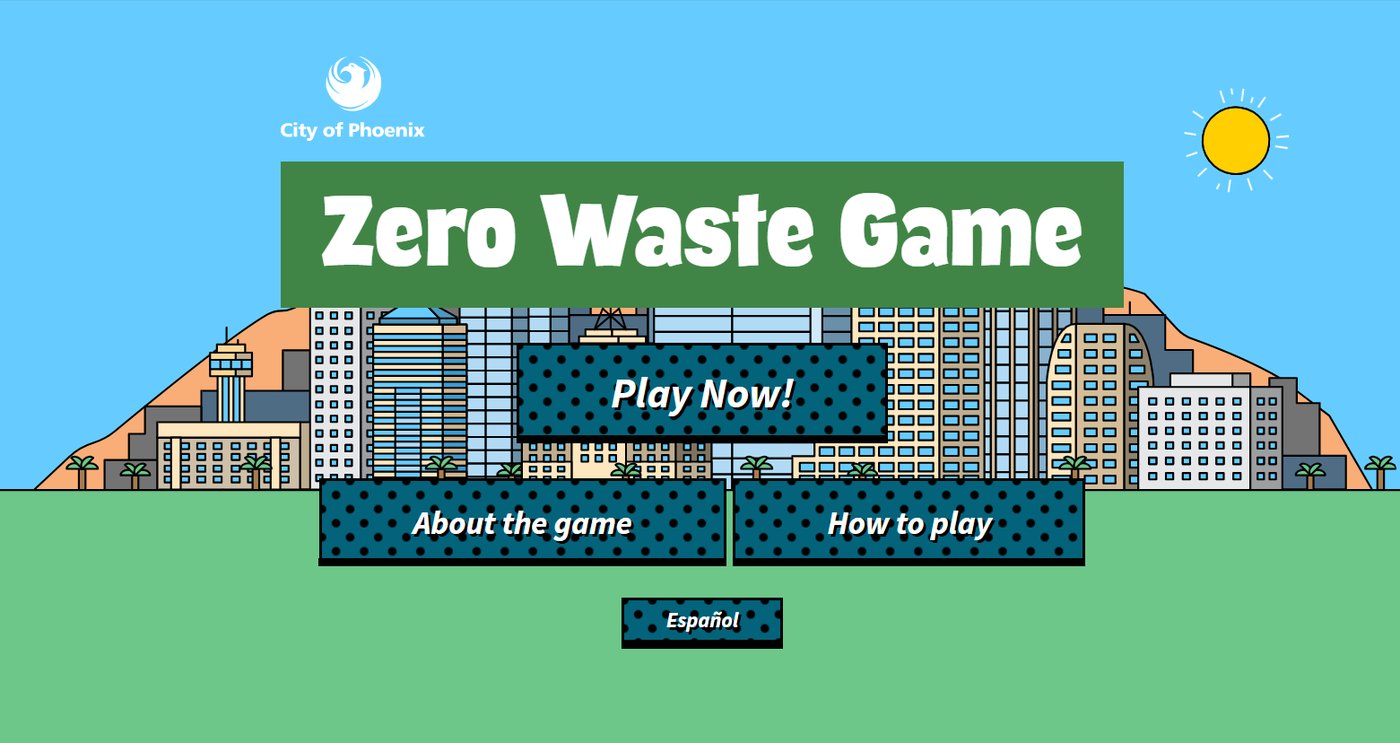
Description: An interactive waste-sorting game where users decide which bin or waste stream different objects belong in. Correct actions help the player progress and earn rewards.
Access: Free online game.
Key areas: Waste sorting, recycling, waste streams, responsible disposal, environmental awareness.
Why it fits: It is very easy to understand and requires almost no previous knowledge. It works well as a short introductory activity or icebreaker.
Website: https://phoenixaz.recycle.game/
5. IL4SH Circular Economy Activities #
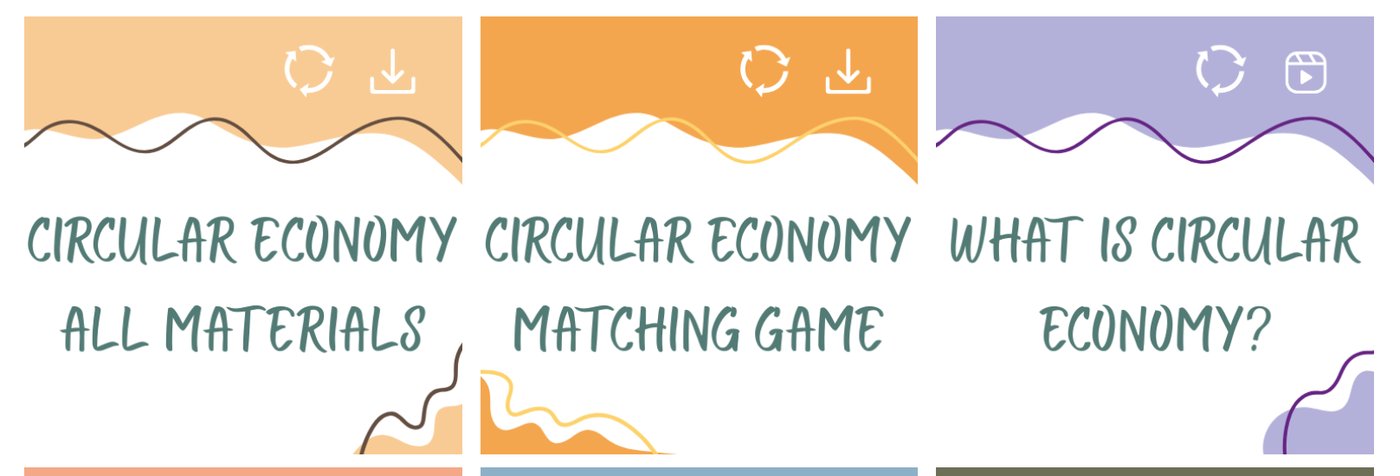
Description: A collection of interactive exercises and games, including matching activities, everyday sustainability scenarios and exercises where participants identify new uses for waste materials.
Access: Free educational resources available online.
Key areas: Circular economy, reuse, waste reduction, sustainable habits, resource efficiency, creative reuse.
Why it fits: The activities are short, practical and easy to adapt to different groups. They can be used individually or as part of workshops.
Website: https://il4sh.bupnet.eu/tools-materials/
6. ecoCEO #
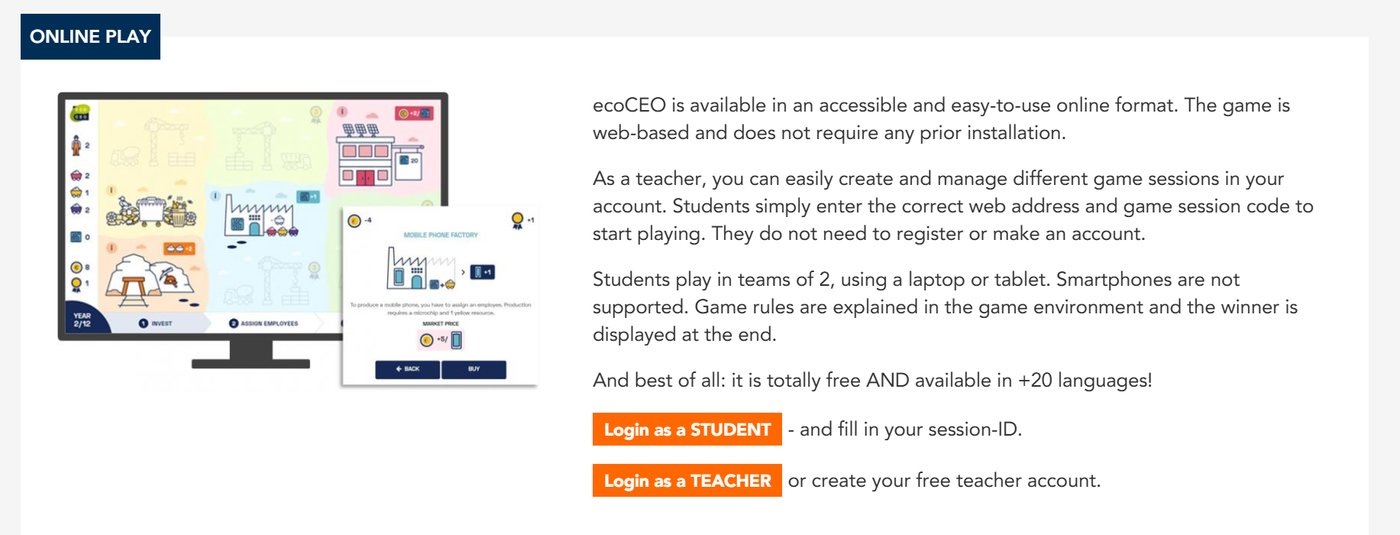
Description: A serious game in which participants manage a virtual company and make decisions about production, resources and circular business strategies.
Access: Free web-based educational game.
Key areas: Circular business models, recycling, repair, reuse, take-back systems, product-as-a-service, resource management.
Why it fits: It allows users to learn through decision-making rather than only reading information. It is especially useful for showing how circular-economy principles can be applied in a business context.