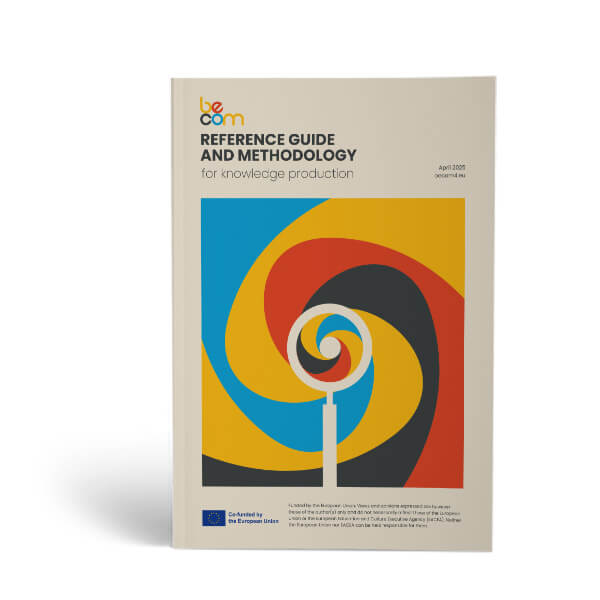
Reference Guide and Methodology
This Reference Guide was created to help people understand and actively contribute to building sustainable and inclusive communities. It offers a clear and practical framework based on the New European Bauhaus vision, combining sustainability, aesthetics, and inclusion with real-world application. By connecting key areas like education, policy, society, economy, and the environment through the Quintuple Helix Model, the guide shows how meaningful change can happen through collaboration. It is especially valuable for anyone who wants to turn ideas into action, as it provides accessible knowledge, hands-on methods, and digital learning tools designed for adult learners. Reading this guide means gaining not just concepts, but concrete ways to create impact, develop skills, and participate in shaping resilient communities for the future.
Reference Guide Part 1 – Introduction
Introduction Environmental and social challenges, from climate change to economic inequalities, demand innovative solutions at the community level. The BeCom…
Reference Guide Part 2 – Roadmap
Introductory Remarks This document is a Section 2 of the BeCom Reference Guide, and it presents the Roadmap - a…
Reference Guide Part 3 – Knowledge Creation
Introduction The Zollverein Coal Mine in Essen, Germany, a UNESCO World Heritage site, has been transformed into a vibrant cultural…
Reference Guide Part 4 – Practical Toolkit for Adaptive Reuse
Introduction This Toolkit for Adaptive Reuse is designed to help urban planners, architects, environmentalists, and local authorities implement sustainable adaptive…
Reference Guide Annex 1 – E-Learning Development Guidelines
Introduction To effectively utilize elements from Activity 1 (Developing Educational Content) in Activity 3 (Developing E-Learning Content), we can implement…
Reference Guide Annex 2 – E-Learning Development Checklist
Element Status (Yes/Pending/No) Action Needed Content Design Modular learning units reflect all five QHM sectors NEB principles (sustainability, aesthetics, inclusivity)…
Reference Guide Annex 3 – QHM Stakeholder Engagement Toolkit
Introduction This toolkit provides practical resources for identifying, engaging, and collaborating with stakeholders across the five Quintuple Helix Model (QHM)…