Toolkits

The Beautiful Communities Reference Guide and Methodology for Knowledge Production is a comprehensive collection of practical resources, methodologies, and real-world examples designed to empower individuals, organizations, and communities to create sustainable, inclusive, and thriving environments. Developed as part of the BeCom project and rooted in the principles of the New European Bauhaus and the Quintuple Helix Model, this guidebook brings together expert knowledge across education, environment, society, economy, and governance.

The toolkit contains a selection of online tools from various initiatives and projects which, independently of the BeCom project, support the understanding and implementation of the key aspects of sustainable community development.

Language note: The Online Toolkits include external simulations, games and interactive resources provided by third-party authors and organisations. These original tools remain in the language and format in which they were published. For multilingual access to the BeCom descriptions and guidance on this page, we recommend using the built-in translation function in Google Chrome or other browsers.

Online Toolkits

Heatwave City Project

Heatwaves Awareness Education Through Online Learning, an initiative funded by the Erasmus+ program of the European Union. HEAT brings together organizations from different European nations with the aim of transforming climate change education and raising awareness among secondary school students about the challenges of heatwaves. Through interactive and innovative approaches, this project aims to create a learning community committed to making a difference in our world.

An interactive game that simulates the effects of the build environment in cities on the temperature and heat waves. Do you want to experience how human decisions on urban design have an impact on temperature and heat waves?

For detailed information about all project partners please see here: https://heatwaves-project.eu/partners/#our-partners

Source: https://platform.heatwaves-project.eu/resources/online_game/1

eReciclare Game

An engaging Circular Economy game that helps players understand how reuse, repair, recycling, and smart resource management can create a more sustainable future. Designed to make circular thinking interactive, educational, and fun.

The Circular Economy game “eReciclare” is developed and provided free of charge to the public by Reciclad’OR S.A.

Str. Atena 11, Sector 1, București 011831, Romania (CUI: 38059439). Contact: office@reciclador.green

Source: https://ereciclare.ro/
Pollinator Park

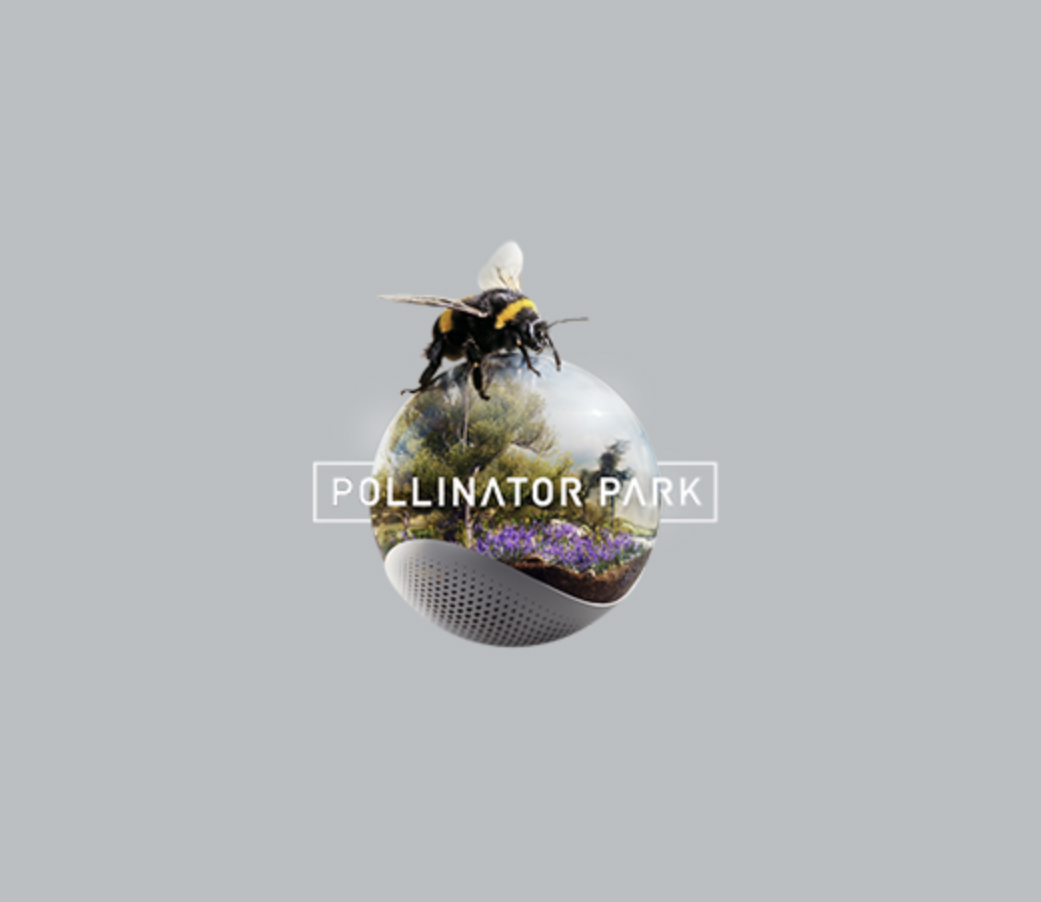
An immersive online experience developed by the European Commission, that presents a future in which insect pollinators have almost disappeared. Users explore a virtual park, try hand pollination, visit a supermarket in a pollinator-deprived world and collect diary entries to discover the full story.
Key areas: Pollinators, biodiversity, food production, ecosystem services, environmental awareness, individual and collective action.
Why it fits this package: It uses exploration, interactive activities and storytelling to demonstrate the ways pollinator decline affects ecosystems, food systems and everyday life. It also encourages users to consider practical actions that can help protect pollinators.

Free online experience.

PSLifestyle – Lifestyle Test

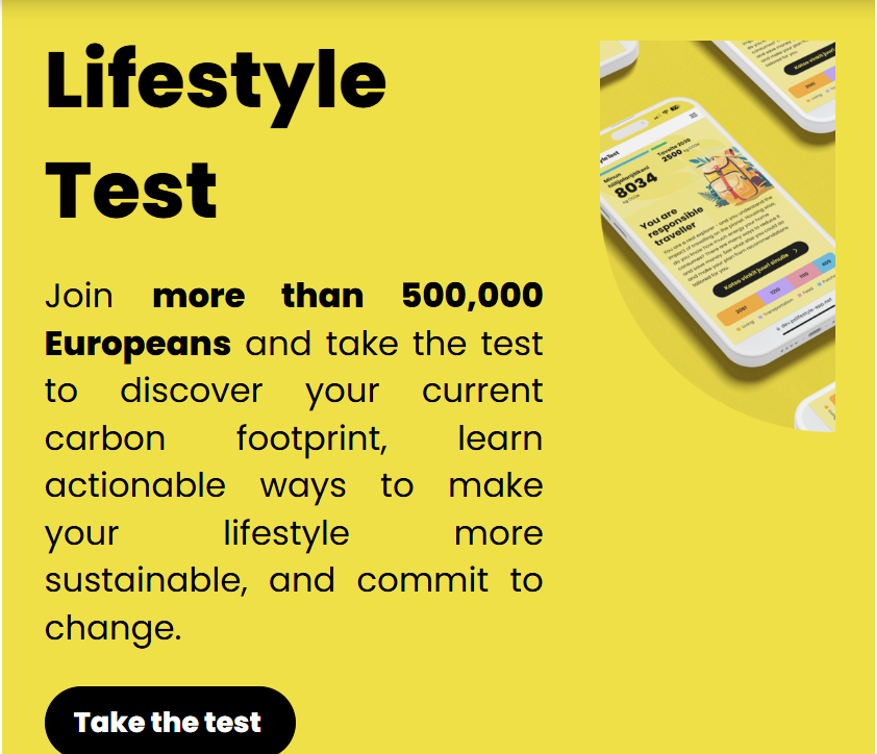
An interactive self-assessment where users answer questions about their everyday lifestyle and receive an estimate of their environmental footprint, together with personalised suggestions for improvement.
Access: Free online tool. Available through the PSLifestyle website.
Key areas: Consumption, food, mobility, housing, waste prevention, reuse, repair, sustainable lifestyle choices.
Why it fits this package: It is simple, personal and interactive. It helps users evaluate their own behaviour and immediately connects their answers with practical circular and sustainable actions.

Source: https://pslifestyle.eu/?utm

The Waste Game

A gamified online learning tool where users complete challenges, answer questions and collect points while learning how to prevent and manage waste.
Key areas: Waste prevention, recycling, food waste, reusable products, packaging, second-hand products, responsible consumption.
Why it fits this package: It makes waste and recycling education more engaging than a traditional questionnaire. The challenges and points system encourage participation and are suitable for workshops or individual learning.

Free online game.

Source: https://thewastegame.iua.ie/?utm_source

Circularity Check

A short self-assessment that helps companies evaluate how circular their current activities and business practices are.
Key areas: Circular business models, resource use, product design, reuse, recycling, organisational practices, circular-economy transition.
Why it fits this package: It provides a quick and structured way for organisations to understand their current circularity level. It is especially useful for SMEs, entrepreneurs and business participants.

Free online questionnaire.

Source: https://circularitycheck.ch/en/welcome

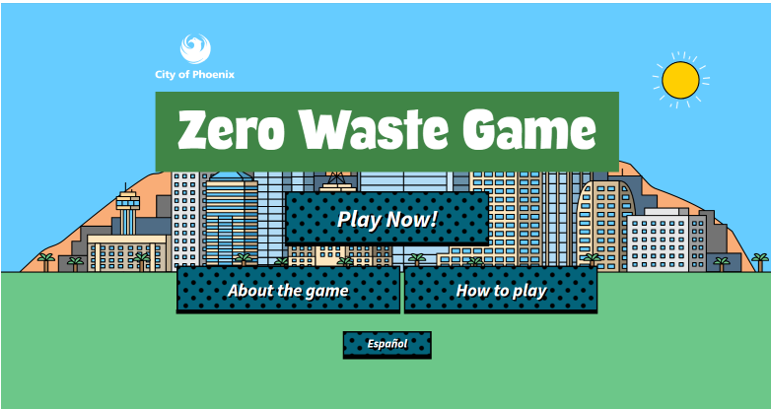
Zero Waste Game

An interactive waste-sorting game where users decide which bin or waste stream different objects belong in. Correct actions help the player progress and earn rewards.
Key areas: Waste sorting, recycling, waste streams, responsible disposal, environmental awareness.
Why it fits this package: It is very easy to understand and requires almost no previous knowledge. It works well as a short introductory activity or icebreaker.

Free online game.

Source: https://phoenixaz.recycle.game/

IL4SH Circular Economy Activities

A collection of interactive exercises and games, including matching activities, everyday sustainability scenarios and exercises where participants identify new uses for waste materials. Key areas: Circular economy, reuse, waste reduction, sustainable habits, resource efficiency, creative reuse.
Why it fits this package: The activities are short, practical and easy to adapt to different groups. They can be used individually or as part of workshops.

Free educational resources available online.

Source: https://il4sh.bupnet.eu/tools-materials/

ecoCEO

A serious game in which participants manage a virtual company and make decisions about production, resources and circular business strategies.
Key areas: Circular business models, recycling, repair, reuse, take-back systems, product-as-a-service, resource management.
Why it fits this package: It allows users to learn through decision-making rather than only reading information. It is especially useful for showing how circular-economy principles can be applied in a business context.

Free web-based educational game.

Source: https://ecoceo.vito.be/en/ecoceo-game

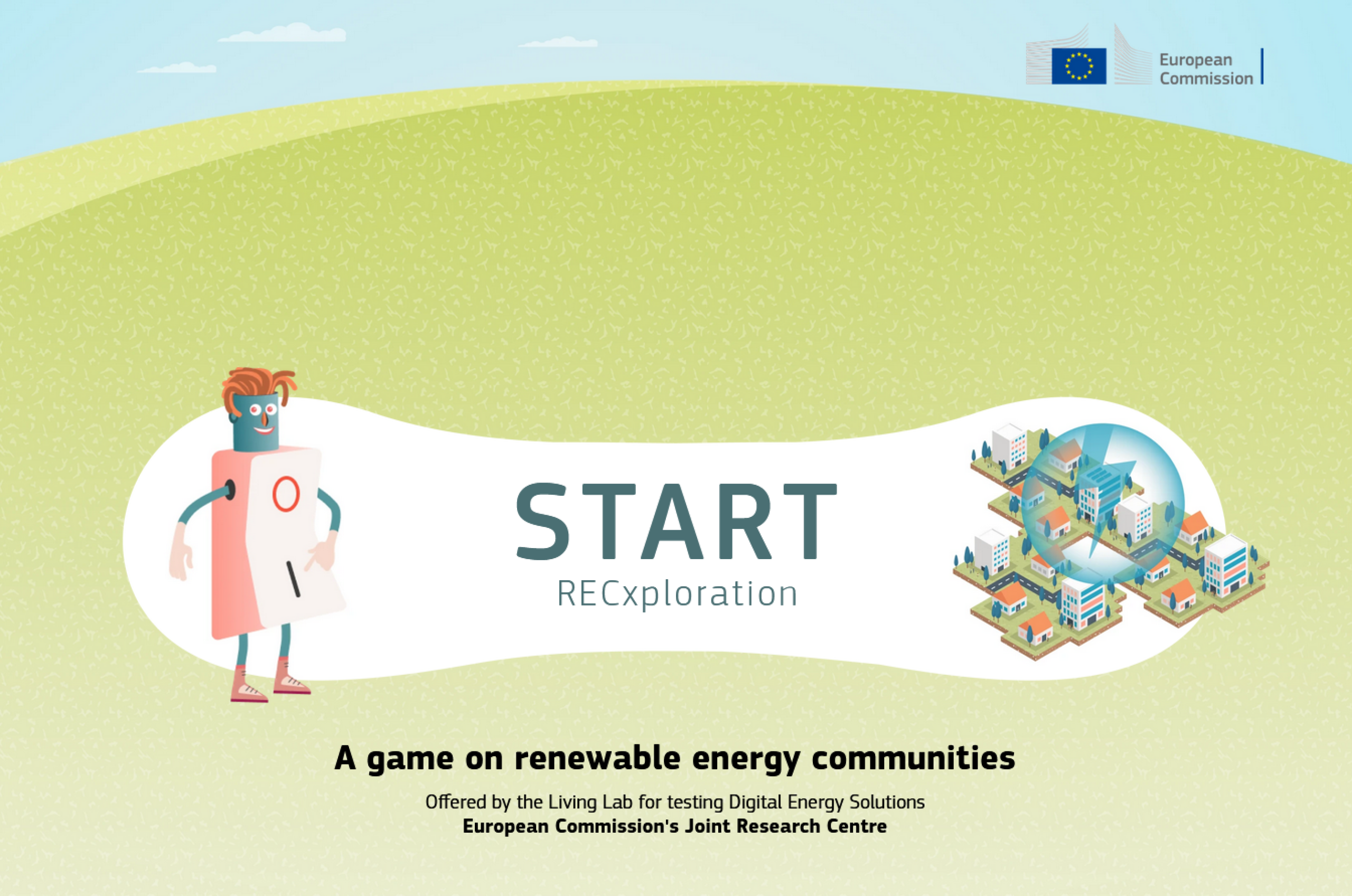
RECxploration

An interactive educational game developed by the Joint Research Centre of the European Commission, where users make decisions about household energy consumption, energy-efficient appliances, photovoltaic systems and participation in a Renewable Energy Community. Across three rounds, players observe how their choices affect energy use, carbon emissions and household energy costs.
Key areas: Energy efficiency, renewable energy, photovoltaic systems, energy consumption, carbon emissions, energy communities, household energy costs.
Why it fits this package: It allows users to explore the effects of energy-related decisions through a practical simulation based on real-world data. The game helps participants understand both individual energy choices and the wider benefits of joining a Renewable Energy Community.

Free online game

Source: https://joint-research-centre.ec.europa.eu/jrc-news-and-updates/recxploration-discover-renewable-energy-communities-through-game-2024-04-29_en

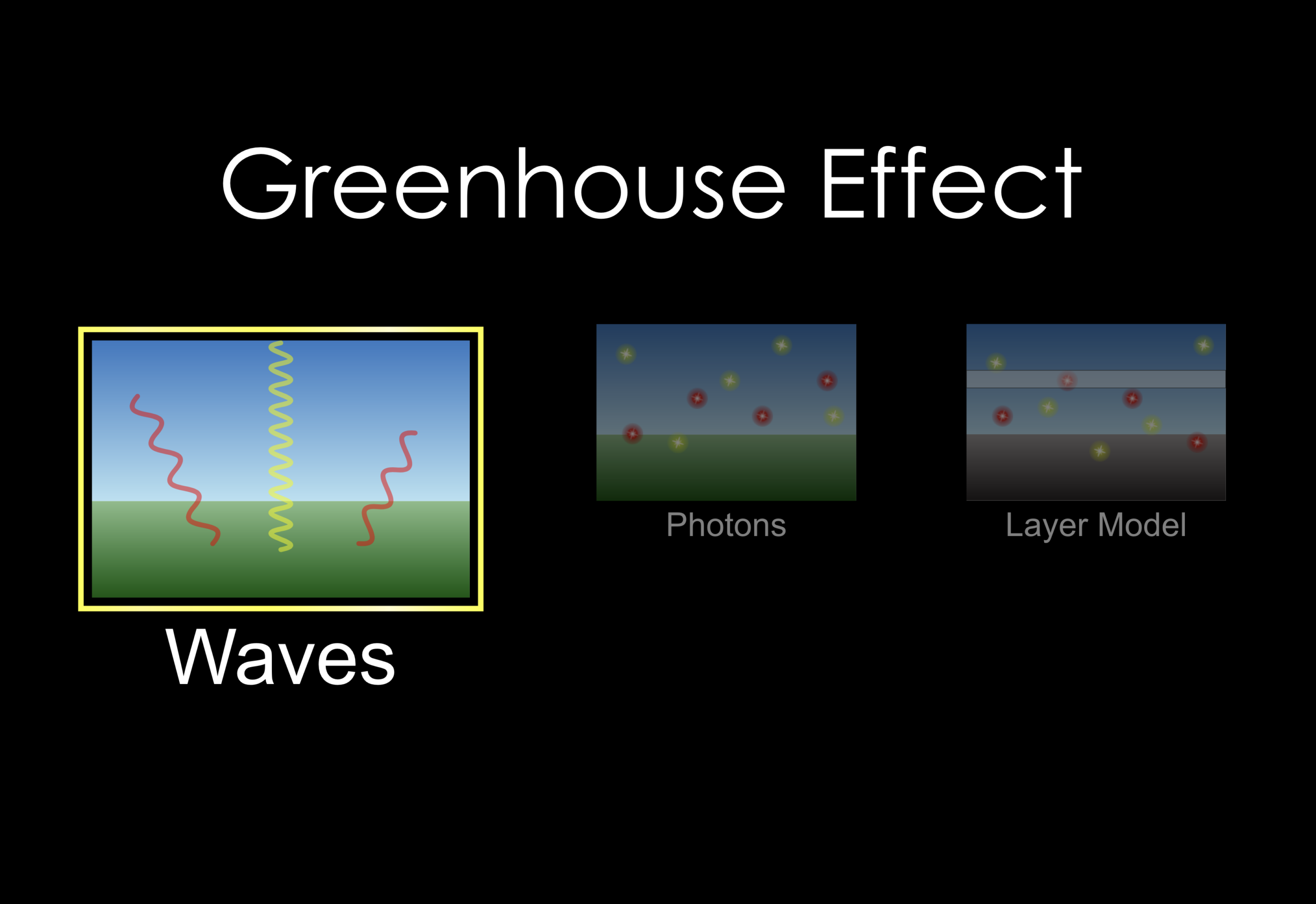
Greenhouse Effect

An interactive simulation that allows users to explore how greenhouse gases affect the Earth’s temperature. developed by PhET Interactive Simulations at the University of Colorado Boulder. By changing atmospheric conditions, users can observe how sunlight and infrared radiation interact with the atmosphere and compare different climate scenarios.
Key areas: Greenhouse gases, climate change, global temperature, sunlight, infrared radiation, atmosphere, environmental science.
Why it fits this package: It makes an invisible scientific process easier to understand through experimentation and immediate visual feedback. The simulation can support discussions about climate change, energy use and the importance of more sustainable buildings and communities.

Free online simulation

Source: https://phet.colorado.edu/sims/html/greenhouse-effect/latest/greenhouse-effect_all.html

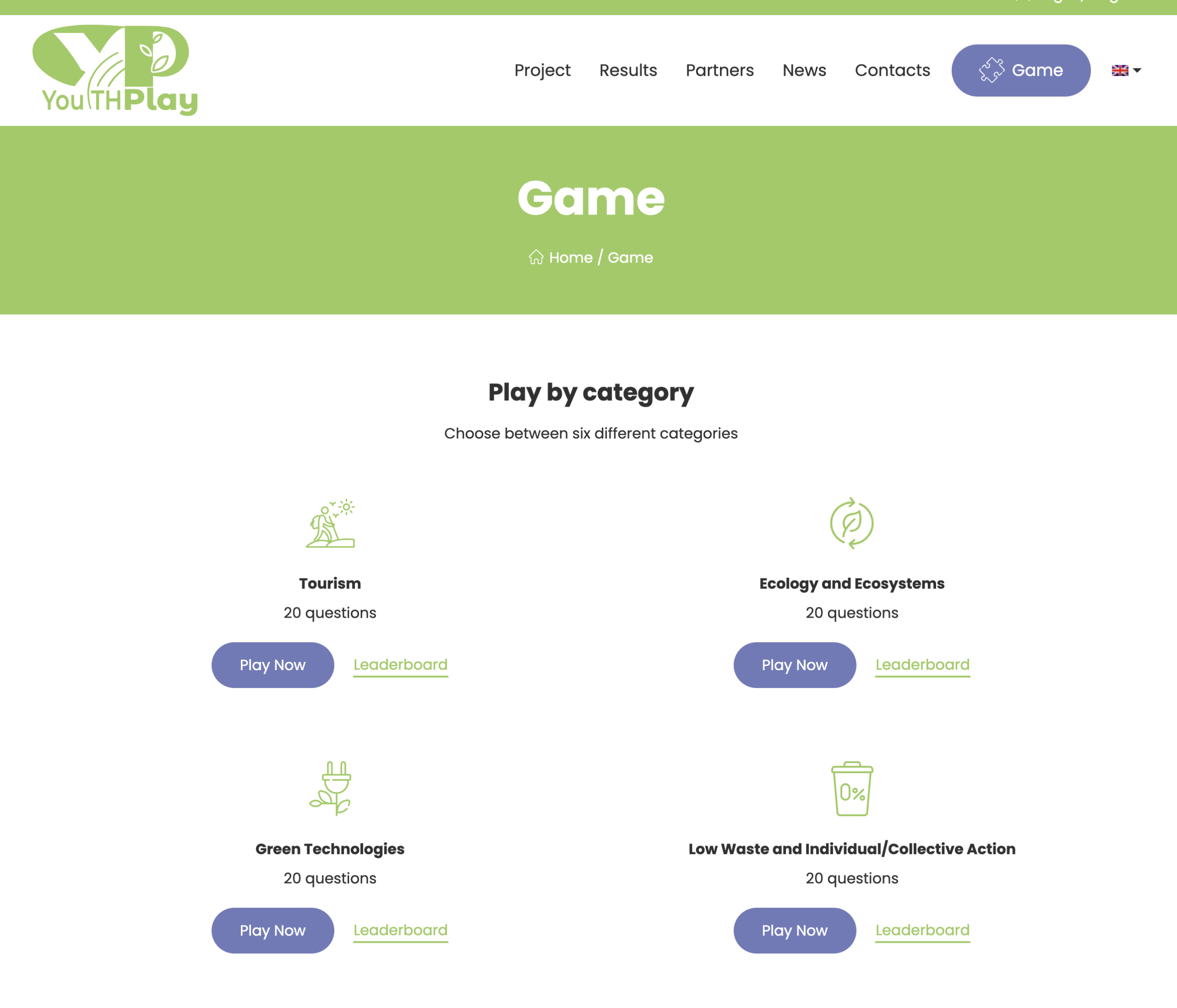
Virtual Planet

An interactive online quiz game where users test and expand their environmental knowledge across six sustainability-related categories. Players can select an individual topic or complete the full 120-question game in normal or timed mode.
Key areas: Ecosystems, green technologies, waste prevention, plastic and waste management, responsible consumption and production, sustainable tourism.
Why it fits this package: It provides a simple and engaging way to assess environmental knowledge while introducing a broad range of sustainability topics. The different categories make it suitable for individual use, workshops or short group activities.

Free online game

Source: https://virtual-planet.eu/game/

GARDENS Digital Game

An interactive educational game where users explore healthy nutrition, environmentally sustainable food choices and the impact of everyday food practices through tests, stories and interactive scenarios.
Key areas: Healthy nutrition, sustainable food choices, responsible consumption, food systems, environmental awareness, community-based growing.
Why it fits this package: It connects food consumption with environmental responsibility in an accessible and engaging way. The activities can support individual learning or group discussions about sustainable food systems, nutrition and community gardening.

Free online game developed through a European Erasmus+ partnership. It is available in English, French, German, Italian, Serbian and Greek and is provided as an Open Educational Resource.

Source: https://gardensproject.eu/playthegame/